
The Ironclad Proof that Tyler Robinson Killed Charlie Kirk

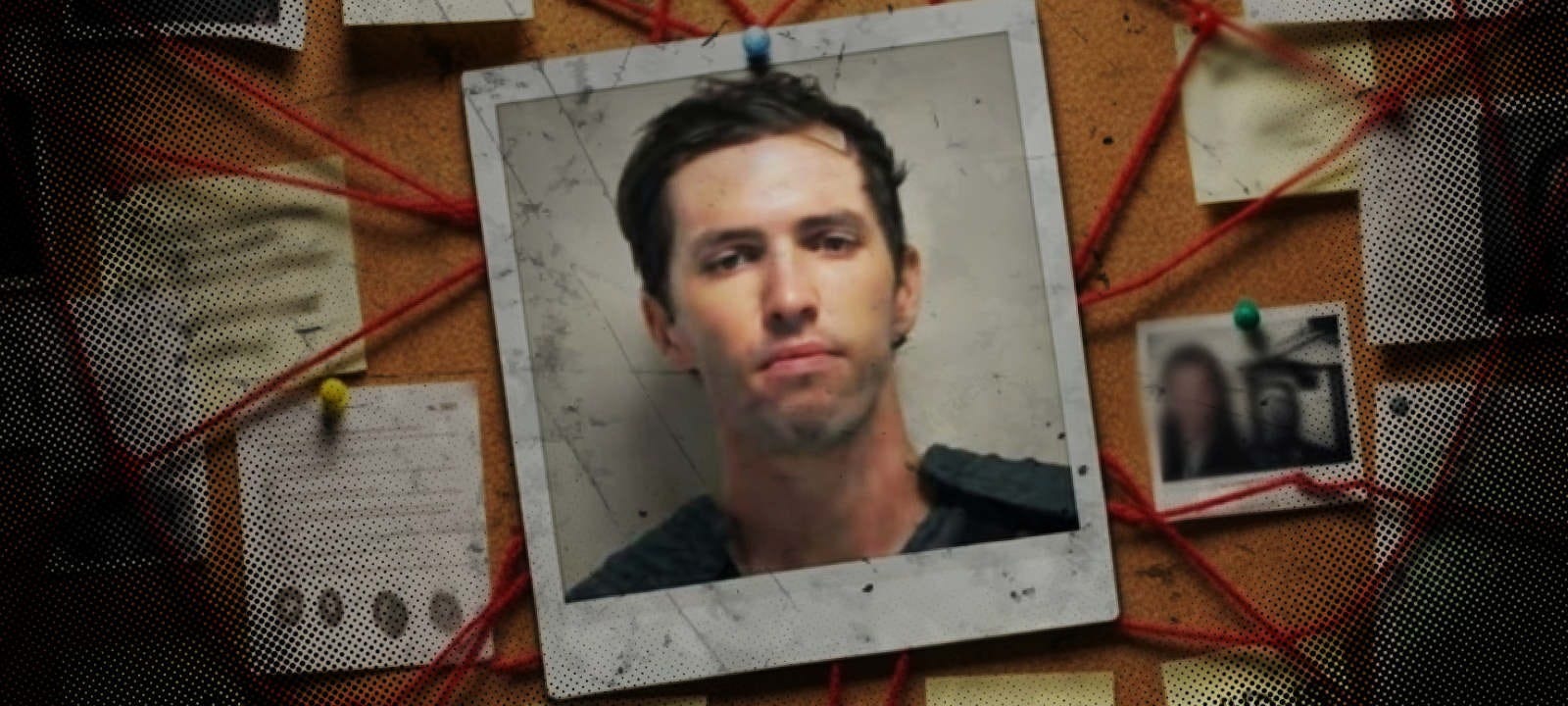
Ok, since I’ve been blocking Candace Owen’s retarded fans left and right in regards to the Charlie Kirk assassination, I thought I should write the be-all, end-all, balls to the wall proof that Tyler Robinson killed Charlie Kirk.
(If you’ve been dealing with her horde yourself, make sure to bookmark this so you have the proper weapon to teabag them whenever they want to infest your replies pushing Candace’s hallucinations)
And the way that I’m going to do it is applying a specific critical thinking tool that would nukify about 90% of the internet’s absolute dumbest screaming matches overnight.
But nobody teaches it.
Not in high school, where they’re too busy making you memorize the year some king died of gout.
Not in college, and certainly not even in law school, where you’d think “not being a total moron” would be a core credit.
Here’s what this is about: You take an idea. You build the shiny, golden, best-case scenario FOR it. Then, you flip that bitch into its exact polar opposite and try to build a case for THAT.
It’s that simple.
If you can’t absolutely demolish the opposite version, your original idea is a wet paper bag.
Period. No exceptions.
This isn’t a “check your vibes” moment. This isn’t some “well, everyone’s truth is valid” hippie drum circle.
This is a structural integrity test. It’s like stress-testing a bridge by driving a fleet of monster trucks across it while simultaneously trying to level it with C4.
If the bridge is still standing, you can cross it.
If it falls... you’re standing on a fever dream held together by spit, confirmation bias, and the hypnotic ramblings of a YouTuber who at any moment could be broadcasting from a padded room.
If you want to get fancy, the tuxedo-wearing names for these tools are Falsifiability, Reductio Ad Absurdum, and Strong Inference.
But I know that nobody gives a shit about Latin, lol
The “I have a job and a mortgage, cut to the chase bro” version is this:
“To prove your idea is real, you have to prove it AND disprove the mirrored, bizarro-version of it.”
If either leg snaps, the whole thing face-plants, even if the first leg looked like it was carved out of granite.
Most people only ever do the “forward pass.” They build a case that feels like a warm hug, it confirms everything they already hate, and they stop. But the “Mirror Test”, the “Bizarro Test”, is where intellectual honesty actually lives.
It’s the dark basement where most conspiracy theories go to get strangled.
So, let’s apply it to a real-world nightmare.
A big one.
September 10, 2025, 12:23 PM
Charlie Kirk is sitting in an amphitheater at Utah Valley University. There are three thousand people watching. He’s doing his “American Comeback Tour,” which is basically his high-wire act of debating sleep-deprived college kids about the most radioactive topics on the planet while cameras roll.
A student named Hunter Kozak asks Kirk how many transgender Americans have been mass shooters in the last decade. Kirk says, “Too many.” Kozak follows up with how many mass shooters there have been total. Kirk’s last words are, “Counting or not counting gang violence?”
Then, a single bullet hits him in the neck. Fired from approximately 142 yards away. From the rooftop of the Losee Center.
Kirk is taken to a hospital. He’s pronounced dead. He was 31 years old, a father of two, and one of the most influential conservative voices in America. The country loses its mind in about nine different directions simultaneously.
Thirty-three hours later, a 22-year-old electrical apprentice from Washington, Utah, named Tyler James Robinson surrenders to the Washington County Sheriff’s Office. His parents drove him there.
He’s been charged with aggravated murder.
The state of Utah wants to execute him.
And the internet, predictably, can’t decide if he did it, if someone else did it, if Charlie Kirk is actually dead, if the Mossad was involved, if it was a “false flag,” or if the whole thing was staged by people who apparently have nothing better to do than orchestrate the most convoluted assassination plot in American history in broad daylight in front of three thousand cell phone cameras.
So let’s do what the internet refuses to do.
Let’s apply the test.
The Forward Case (Did Tyler Robinson Kill Charlie Kirk?)
I’m going to lay every piece of publicly known evidence on the table. No editorializing. No vibes or ‘feelings’. Just the receipts.
Then I’ll go for the fun part: Try to burn the whole fucking thing to the ground.
1) The Confessions
This is where it starts, and honestly, this is where it could also end. Tyler Robinson did not confess once.
He confessed through FIVE separate, independent channels, to FIVE different audiences, using FIVE different communication methods.
Channel One: The note under the keyboard. Before the shooting happened, Robinson left a handwritten note under his computer keyboard at the apartment he shared with his roommate and romantic partner, Lance Twiggs. The note read:
“I had the opportunity to take out Charlie Kirk and I’m going to take it.”
After the shooting, Robinson texted Twiggs and told him to look under the keyboard. Twiggs found it. Twiggs photographed it. Twiggs later gave it to police.
Read that again.
The note was written BEFORE the shooting.
This isn’t a confession after the fact. This is a declaration of intent, in his own handwriting, placed in a location only his roommate would find, referenced in a text message sent from Robinson’s phone.
There is no version of a frame job that accounts for a pre-written note under the suspect’s own keyboard.
Channel Two: The text messages to Twiggs. After the shooting, Robinson and Twiggs exchanged a long series of text messages. Robinson told Twiggs he was “stuck in Orem” and needed to retrieve his rifle from a “drop point.” When Twiggs asked, “You weren’t the one who did it, right????” Robinson replied: “I am. I’m sorry.” When asked why, Robinson said,
“I had enough of his hatred. Some hate can’t be negotiated out.”
He told Twiggs he’d been planning it for over a week. He referenced the engraved bullets, saying, “The effin’ messages are mostly a big meme.” He joked that if “notices bulge uwu” showed up on Fox News, he might have a stroke. He told Twiggs to delete the conversation, to refuse media interviews, and to ask for a lawyer if police came asking questions.
Twiggs, who was described by authorities as “aghast” and “shocked,” turned over every message voluntarily and was placed under FBI protection, until he was spotted in Texas a few days ago.
Channel Three: The Discord group. Robinson was part of a small Discord group of about 30 friends. After the shooting, members of the group started posting about Kirk’s death. Some noticed the FBI’s surveillance photos looked like Robinson. Robinson joked it was a “doppelgänger” trying to frame him and that they should turn him in for the reward money. Someone told him not to go to any McDonald’s, a reference to how Luigi Mangione got caught. Robinson replied that he’d
“better also get rid of this manifesto and exact copy rifle I have lying around.”
Then, at 8:57 PM on September 11, just two hours before turning himself in, Robinson posted:
“Hey guys, I have bad news for you all. It was me at UVU yesterday. im sorry for all of this. im surrendering through a sheriff friend in a few moments, thanks for all the good times and laughs, you’ve all been so amazing, thank you all for everything.”
Discord confirmed the message’s authenticity and provided it to investigators.
Channel Four: His family. Robinson’s mother recognized her son in the surveillance photos released by police. His father noticed that the rifle described by authorities matched a gun he’d given his son as a gift, his grandfather’s rifle. The father called Robinson and asked for photos of the gun. Robinson didn’t send them. His father called again. Robinson “implied that he was the shooter,” told his parents Kirk “spreads too much hate,” and said he didn’t want to go to prison. He then told his father he was considering killing himself.
His parents talked him out of it and convinced him to come home.
Channel Five: The family friend. Robinson’s parents called a retired deputy sheriff who was a family friend. Some sources describe this person as a youth pastor who was also a U.S. Marshals task force officer. The friend met with Robinson and his parents and convinced Robinson to surrender. Robinson told the friend he had disposed of the clothing he was wearing during the shooting. The friend advised Robinson to bring any remaining evidence with him to avoid a police search of his parents’ home. The three of them drove Robinson to the Washington County Sheriff’s Office, where he was taken into custody without incident.
Five confessions. Five different audiences. Five different platforms. Text messages, handwritten notes, Discord messages, face-to-face conversations with family, and a detailed exchange with a retired law enforcement officer.
The messages contain specific operational details: the location of the hidden rifle, the engraved bullet casings, changing clothes, planning the attack for over a week, wanting to retrieve the weapon before his father found out it was missing.
This is the evidentiary equivalent of a guy standing in a room full of security cameras, holding a signed confession in one hand and the murder weapon in the other, while live-streaming the whole thing and texting his mom about it.
2) The Physical Evidence
A university police officer heard the shot, identified it as a rifle by its sound, and immediately started looking for sniper positions. He found a rooftop area about 160 yards from where Kirk was seated. In the gravel on that roof, he found impressions consistent with a person lying in a prone shooting position, marks from elbows, knees, and feet.
In a wooded area at the edge of campus, along the suspect’s escape route, investigators found a bolt-action rifle wrapped in a towel. It was a Mauser Model 98, .30-06 caliber, equipped with a mounted scope. It contained one spent round and three unspent rounds. This is consistent with a bolt-action rifle being fired once: the spent casing stays in the chamber until the bolt is cycled.
The rifle, the towel, the casings, all of it was sent to the FBI lab at Quantico.
Robinson’s DNA was found on the trigger. On other parts of the rifle body. On the fired cartridge casing. On two of the three unfired cartridges. And on the towel.
His father confirmed that the gun matched one he had given Robinson as a gift, originally belonging to Robinson’s grandfather. Robinson himself referenced it in text messages:
“Judging from today, I’d say grandpa’s gun does just fine.”
And later:
“I’m worried what my old man would do if I didn’t bring back grandpas rifle.”
Each cartridge had messages engraved on the casings. One read “NoTices Bulge OWO What’s This?”, a furry meme. Another said “Hey fascist! CATCH!” with arrow symbols believed to be a video game cheat code. Another had the Italian anti-fascist song “Bella Ciao.” Another said “If you read this, you are GAY Lmao.”
At Robinson’s home, investigators later found engraving tools believed to have been used to inscribe the casings, along with recently purchased shooting targets.
3) The Surveillance Timeline
Investigators tracked Robinson’s movements through the campus security camera network. He arrived at 11:51 AM, entering campus from the north through a tunnel under Campus Drive after parking his gray Dodge Challenger nearby. He was wearing black clothing and walking with a distinctive stiff-legged gait, very little bending in his right leg. The charging document notes this is “consistent with a rifle being hidden in his pants.”
Video shows an individual dropping onto the roof around 12:15 PM, moving into a prone shooting position. At 12:23 PM, Kirk is shot. Video then shows the individual getting up and running across the roof carrying an item consistent in shape with a rifle. The person climbs down from the building, drops the item as they hit the ground, picks it back up, and sprints across Campus Drive, nearly getting hit by a passing van. They then head into the wooded area where the towel-wrapped rifle was later found.
A gun store expert later demonstrated on camera for NewsNation that concealing a Mauser with a scope in a pant leg is physically possible and does produce exactly the kind of stiff-legged gait captured on video.
Robinson’s own parents identified him from the surveillance photos that police released publicly.
His mother thought she recognized him on the news.
When she called, Robinson told her he was “at home sick,” the same excuse he’d used the day before.
His father noticed the rifle matched.
They confronted him. He eventually admitted it.
But there’s one more detail that rarely gets mentioned: Hours after the shooting, that same evening, Robinson went back to the campus. He “made contact” with a police officer who was guarding the perimeter of the lockdown zone. Robinson reportedly told the officer he needed to get something from near a garage. The officer didn’t find this suspicious at the time because hundreds of people had fled during the panic and many left belongings behind. But the officer did a routine check on Robinson’s license plate. When investigators later identified Robinson as a suspect, they found that plate check in the system, placing him at the scene hours after the murder, near the exact spot where the rifle was hidden.
Robinson had texted Twiggs about this in real time:
“If I am able to grab my rifle unseen, I will have left no evidence. Going to attempt to retrieve it again, hopefully they have moved on.”
And:
“I haven’t seen anything about them finding it.”
The officer’s presence stopped him from getting the rifle back.
So to summarize: Robinson went back to the crime scene to retrieve the murder weapon, was intercepted by a police officer, failed, and then texted his roommate about the whole thing.
4) The Motive
Prosecutors allege Robinson targeted Kirk because of his political expression. Robinson’s mother told investigators that over the prior year, her son had become “more political” and shifted left, becoming vocal about gay and trans rights. Robinson had begun a romantic relationship with his roommate, Lance Twiggs, a biological male who was transitioning genders. Robinson described his own father as having become “hardcore MAGA” since Trump returned to office. Before the shooting, Robinson mentioned Kirk’s upcoming visit to UVU at a family dinner and discussed how he didn’t like Kirk or his viewpoints.
Across his confessions, Robinson consistently stated his motive:
“I had enough of his hatred. Some hate can’t be negotiated out.”
He called Kirk someone who “spreads too much hate” and said, “There is too much evil and the guy spreads too much hate.” He told Twiggs he’d been planning the attack for over a week.
He was not enrolled at UVU. He drove approximately four hours from Washington County to Orem to do this.
Now, The Mirror-Bizarro Test (”Robinson Did NOT Kill Charlie Kirk”)
Now we flip it. We construct the opposite claim and try to make it survive.
Idea ¬A: “Tyler Robinson did not kill Charlie Kirk.”
For this to be true, you need ALL of the following to be simultaneously true:
1) The confessions are fabricated. All five of them. The text messages to Twiggs were either forged by law enforcement or Twiggs is lying. The Discord messages were faked by Discord or by someone who hijacked Robinson’s account, and Discord itself is lying when it confirmed their authenticity. The handwritten note under the keyboard was planted. Robinson’s statements to his parents were coerced or misreported. And the retired deputy sheriff who convinced Robinson to surrender is also lying or confused.
A criminal law expert at Northeastern University stated flatly that any statement made on social media is attributable to you and admissible as evidence of intent. Another expert said the messages didn’t read like anything law enforcement would fabricate.
Discord conducted its own internal investigation and confirmed the account belonged to Robinson while finding no evidence the attack was planned on their platform.
For the confessions to be fake, you need a coordinated fabrication involving Robinson’s romantic partner, his Discord friends, his parents, a retired law enforcement officer, and a major tech company. None of whom have any apparent motive to frame a 22-year-old electrical apprentice from a quiet Utah suburb.
2) The DNA is coincidental. Yes, it was his grandfather’s rifle, so his DNA being somewhere on the gun isn’t inherently shocking. But his DNA was on the fired casing. That’s the round that was chambered, fired through an explosive discharge, and ejected on the day of the murder. You’d have to argue that DNA from a prior handling survived the firing process and remained detectable on a spent casing that was also handled by the actual shooter.
While theoretically not impossible, this is a stretch that gets thinner the more you think about it.
3) The surveillance video shows someone else. Video captured the suspect entering campus, walking with a limp, climbing to the roof, assuming a shooting position, firing, running across the roof with a rifle, jumping down, and fleeing into the wooded area where the weapon was found. His own parents identified him from this footage unprompted. His mother recognized him on the news. His father recognized the rifle. For the video to show someone else, Robinson’s parents both independently misidentified a stranger as their own son. A gun store expert demonstrated the exact gait anomaly produced by concealing this type of rifle in clothing. The same gait visible in the video.
4) The return to the crime scene has an innocent explanation. Robinson was caught on a license plate check near the crime scene perimeter hours after the shooting, in the area where the rifle was hidden. His own text messages describe going back to retrieve the weapon. For this to be innocent, Robinson happened to be near the exact spot where the murder weapon was hidden, on the same evening of the murder, for completely unrelated reasons, and also happened to text his roommate about retrieving a rifle from that area at the same time, as some kind of morbid joke or coincidence.
5) The physical evidence at his home is unrelated. Engraving tools matching the inscriptions on the cartridge casings, and recently purchased shooting targets, were found in Robinson’s residence. For these to be irrelevant, someone would have to have planted engraving tools and targets in his home that happen to match the methods and materials used in the assassination.
6) Every behavioral indicator is meaningless.
Robinson fled the scene. Changed his clothes.
Hid the murder weapon. Attempted to retrieve it.
Instructed his roommate to delete evidence and refuse to talk to police.
Considered suicide.
...and turned himself in through a retired deputy sheriff after his parents confronted him.
For all of this to be consistent with innocence, you’d need to explain why an innocent man destroys evidence, coaches witnesses to obstruct justice, contemplates suicide over something he didn’t do, and surrenders to police through legal intermediaries.
There is no construction of innocence that accounts for this behavioral pattern.
Where the Inverse Has Any Oxygen At All
There are exactly two areas where critics have found traction, and neither actually challenges whether Robinson pulled the trigger.
1) The missing surrender video. A public records request revealed that the Washington County Sheriff’s Office no longer has surveillance footage of Robinson arriving to turn himself in. The 30-day retention period lapsed, and the video was never sent to any other agency. A defense attorney called this “very concerning.” Is it sloppy? Yes. Does it prove Robinson didn’t do it? No. It’s a procedural failure in evidence preservation, not a substantive challenge to the mountain of evidence placing Robinson at the scene with the weapon, the motive, and the confessions.
2) The conspiracy ecosystem. Online theories about second shooters, professional hits, Mossad involvement, “false flags,” hand signals in the crowd, and coordinated plots have exploded. Conspiracist YouTubers attend pretrial hearings. Robinson’s own defense attorney asked investigators in court whether they had looked into “alternative theories.” Roger Stone said it looked like “a professional hit.” Russian state media amplified theories about suspicious gestures. Antisemitic accounts pushed narratives about Israeli involvement. Candace, at a bare minimum, suggested that Kirk was killed because he was about to abandon the pro-Israel cause.
The only problem: None of these theories have produced a single piece of verifiable counter-evidence.
Not one photograph, not one forensic finding, not one witness statement.
They are built entirely on misinterpreted crowd videos, recycled footage from other shootings (one viral “escape video” was actually from a completely different shooting in Reno, Nevada, a month earlier), and the deep human need to believe that when something terrible happens, the explanation must be proportionally complex.
Because a 22-year-old with his grandpa’s hunting rifle and a collection of meme-engraved bullets doesn’t feel “big enough” to explain the assassination of one of the most powerful conservative voices in America.
So people invent bigger explanations. Not because the evidence supports them, but because the simplicity of the truth is psychologically unsatisfying.
The Verdict
The forward case passes. DNA, surveillance, five independent confessions, physical evidence at his home, behavioral indicators, motive, opportunity, and the suspect’s own parents identifying him.
Every piece reinforces every other piece.
There are no orphan data points.
No evidence that contradicts the rest.
The inverse collapses completely. To maintain “Robinson didn’t do it,” you need simultaneous fabrication by his partner, his Discord friends, his parents, a retired law enforcement officer, and a major tech company. You need DNA on a fired casing to be coincidental. You need his own mother and father to have misidentified their son. You need surveillance video, text messages, a handwritten note, engraving tools, and shooting targets to all be planted or irrelevant. You need an innocent explanation for fleeing, hiding evidence, coaching witnesses, returning to retrieve a murder weapon, and surrendering through a legal intermediary.
Each individual alternative explanation requires a stretch.
Combined, they require a conspiracy so vast and so perfectly coordinated that it would be, by a wide margin, the most impressive intelligence operation in American history, pulled off flawlessly in real time, in front of 3,000 witnesses and hundreds of cameras, with zero leaks, and the only beneficiary being the framing of an electrician’s apprentice from southern Utah whose ACT score was in the 99th percentile but who, apparently, nobody in the intelligence community had ever heard of.
The bizarro test doesn’t just fail here. It collapses so hard it leaves a Dragon-Ball-sized crater.
But now that we’ve gotten this far...
Why This Matters Beyond This Case
The point of this exercise isn’t just justice for Charlie Kirk. Tyler Robinson will have his preliminary hearing in May 2026. A jury will see the evidence. The legal system will do its work.
The point that I want to make with this exercise is the tool.
Most of us walk through life doing only the forward pass. We hear a claim, check if it makes sense, and if it does, we believe it. That’s how conspiracy theories work. Someone builds a narrative. It sounds coherent.
You feel smart for seeing the pattern. You give yourself a tap on the shoulder, and then... you stop.
The mirror test forces you to build the counter-narrative with the same rigor. And the moment you do, you discover something uncomfortable: most of the ideas you’ve accepted were never stress-tested. They just had good storytelling.
In this case, the evidence against Robinson is so overwhelming that the inverse is almost comically impossible to construct. That’s rare. In most real-world arguments, about politics, about business strategy, about your personal beliefs, the inverse survives much better than you’d expect. And when it does, that’s information. That’s a signal telling you that your original idea is weaker than it feels.
The next time someone hands you a confident claim, don’t just ask, “Does this make sense?” Ask: “Can I build a coherent version where it’s NOT true?” If yes, without stretching, your forward case is weaker than it feels. If no, if the opposite collapses under its own weight, you’re probably standing on solid ground.
The bridge holds. Drive the truck.
...and for fucks sake, don’t fall for grifters who will make any sort of conspiracy theories just for clicks, profit and fame. That’s the only way we can keep these spaces (moderately) sane.
Good luck. Much Love and Bliss,
Jesús
The Body Language Guy.
Well said, Jesús!
Awesome writing Jesus, but please consider moderating your use of bad language. There are ladies present.